How do midwifery students from the University of Rwanda contribute in the prevention of adolescent pregnancies for in-school children in Rwanda?
To prevent adolescent pregnancies in high schools, the Rwandan government has strongly invested in sexual and reproductive health (SRH), mainly through various school-based programmes, such as further developing Biology and Health Sciences classes from senior three to six. In addition, the Rwanda Medical Center supervises an SRH teaching programme for in-school and out-of-school adolescents, supported by the Imbuto Foundation and UNFPA. To date, these programmes have been less effective than expected. School-based programmes still face the issue of discomfort and taboo surrounding SRH among teachers and students.
Consequently, adolescents seek information on SRH from their peers, but this presents an initial issue regarding the reliability of the information exchanged, as research has shown that peers are often not correctly informed on SRH topics. Additionally, peers may not be readily accessible to all adolescents, leaving some needs unmet.
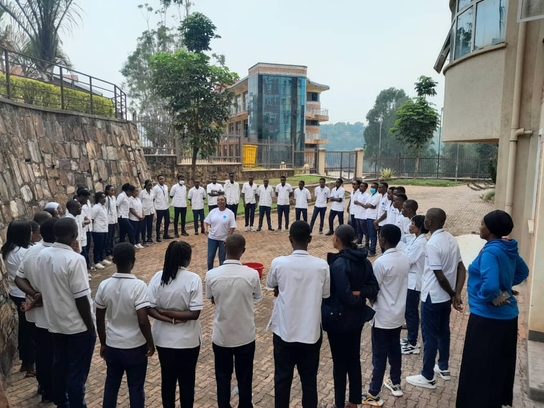
Thus, to address adolescents' unique needs, the Sexual and Reproductive Health Peer Education Program (SRH PEP) was developed. It was implemented in collaboration with the University of Rwanda (UR) and University Colleges Leuven-Limburg (UCLL)-Belgium, funded by VLIRUOS. In this talk, we will share our experiences in developing and implementing SRH PEP in high schools in Rwanda to prevent teenage pregnancies.
Speakers:
- Aimable Nkurunziza, RN, BScN, MScN, MPH, PhD(c), Assistant Lecturer at the University of Rwanda
- Olive Tengera, RM, BNE, MSN (M&WH), Lecturer at the University of Rwanda
- Jean Bosco Henri Hitayezu, RM, BScM, MSN (Neonatal), Assistant Lecturer at the University of Rwanda
- Justine Bagirasono, RM, BScM, MSN, Assistant Lecturer at the University of Rwanda