Improving women's health in Peru with the support of higher education institutions, women and local authorities
Speaking openly about vaginal health is taboo in Peru, and public attention to intimate female care has been neglected for decades.
For instance, during the pandemic, several primary health care centers shut down gynaecological consultations, affecting women suffering from vaginal infections. With the current Laura 2.0 project, we aim to create a national (in Peru) and international research network investigating vaginal health by actively engaging key stakeholders from society and academia.
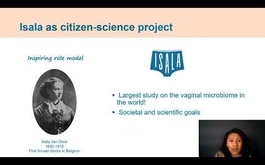
Moreover, Laura 2.0 is developing research capacities in Peru, and more importantly, it is involving citizens (women) in science via a citizen science project inspired by the Belgian Isala project.
Speakers
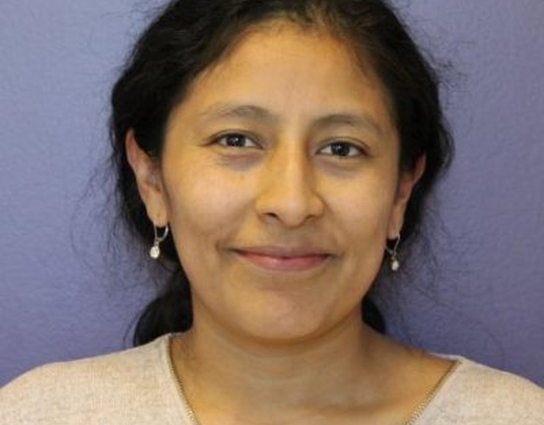
PhD Sandra Condori
Sandra performed her Bachelor studies in Peru, then she completed a Master's degree in Molecular Biology at the universities of Brussels, Leuven, and Antwerp. She started her Ph.D. within the framework of the MELiSSA project (Micro-Ecological Life Support System – European Space Agency), in collaboration with the University of Mons (Belgium) and the Belgian Nuclear Research Center (SCK-CEN). After her promotion in 2016, Sandra joined the Lebeer Lab in 2018 as a postdoctoral researcher. She focuses on the vaginal microbiome, developing projects for capacity building in developing countries such as Peru and Cameroon.
PhD student Josiane Kenfack
Josiane is a student at the University of Yaoundé - Cameroon. She is affiliated with the Institut De Recherches Médicales Et D'études Des Plantes Médicinales (IMPM) and the Centre de Recherches sur les Maladies Emergentes et Ré-emergentes (CREMER). She is a team member of the Rose Leke project in Cameroon.