


Empowering Women Farmers in East Java
Women are central to agricultural production in rural East Java, yet their contributions have long remained undervalued and underrecognized. Despite their vital role, many women farmers face systemic barriers, including limited access to information, restricted mobility, and weak social networks.
Responding to the challenges, the project aimed to empower women, while strengthening sustainable and resilient food systems in East Java and ensuring the protection and legal recognition of traditional agricultural knowledge.
In July 2025, a capacity-building training targeting women farmers was conducted. In Menyarik Village in the Pasuruan District, where agricultural activities are predominantly led by men, the training has encouraged greater female participation. Despite the progress, when in December 2025 delegates of the Belgian Ministry of Foreign Affairs visited the project, many women farmers chose not to participate in the meeting. Local patriarchal norms surrounding the hosting of foreign guests meant that women remained behind the scenes, preparing food rather than joining the discussion.
Padi Village in the Mojokerto District, a place that appears more modern than Menyarik Village, is characterized by a vibrant agricultural community where female farmers are highly active in rice cultivation. The women who participated in the VLIRUOS project, demonstrate a profound understanding of their legal standing, and apply their knowledge of farmers' rights. During the training sessions in July 2025, they took the initiative to transfer this knowledge to their peers, creating a ripple effect throughout the community. As a result, the women in the village are now well-versed in critical issues, including their rights to fertilizer subsidies, seed sovereignty, land tenure, and fair market access.
One distinct success story is the significant improvement in their bargaining power. Historically dependent on middlemen who often dictated lower prices, the women have successfully bypassed these intermediaries. They are now selling their rice harvest directly to the National Logistics Agency (BULOG), securing better prices and greater financial stability.
Cleaning Rivers with Eco enzyme
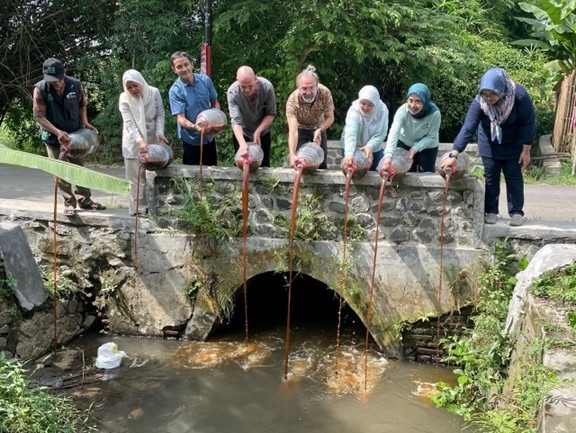
The project “Empowering Women Farmers in East Java: Advancing the Right to Seed for a Sustainable Food System” by Dr. Intan Soeparna is a collaboration between Universitas Airlangga (UNAIR) and Vrije Universiteit Brussel (VUB). In december 2025, the delegation of the field visit from the Belgian Directorate-General for Development Cooperation and Humanitarian Aid (DGD) included Joris Van Nieuwenhove, DGD representative, accompanied by Kris Vanslambrouck, Asia expert from 11.11.11.