


Faces, Places, and Impact: Stories of Change – an interview with the winners of the 2025 Photo Contest
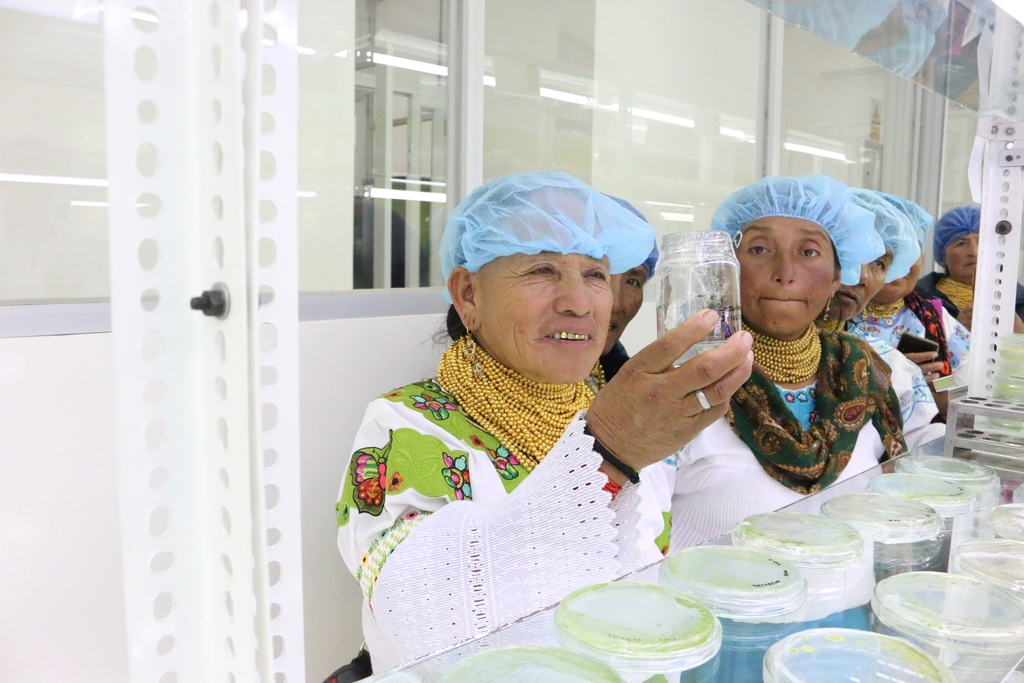
In early 2025, we held a photo contest titled Faces, Places, and Impact: Stories of Change. Through this contest, we wanted to highlight the role of photography in showcasing academic collaboration and real-world transformation. This contest was proudly won by Professor Sania Ortega. She is part of a VLIRUOS funded Short Initiative Project between Universidad de Cuenca and Universidad Técnica del Norte in Ecuador and the Vrije Universiteit Brussel (VUB) in Belgium. The collaboration is led by Professor Yvan Vander Heyden and Dr. Eugenia Peñaherrera-Wilches. In May 2025, we had the pleasure of interviewing the team. In this interview, we discussed the impact of the VLIRUOS funded Short Initiative Project, the importance of international cooperation, and the story behind the winning picture.
How did the idea for the project come about?
Fabian Leon Tamariz*: Together, we wanted to combine ancestral knowledge with modern scientific knowledge. The idea was to develop a modification of a plant with medicinal aspects into a product that can be sold by the people from the communities. The issue was that people in the rural areas did not have the possibility to commercialize ancestral knowledge and earn money from it.
Eugenia Peñaherrera-Wilches*: Also, the younger generations are forgetting this ancestral knowledge because they do not want to use any natural herbal medicines; they want to go to the cities and use occidental medicine. We want to revitalize the knowledge of these ancestral people and preserve it.
In the photo, we see midwives from La Esperanza, Ecuador, during a lab visit. The midwives play a vital role in making childbirth safer and reducing maternal mortality in remote communities. What outcomes or milestones have you reached so far in this community?
Fabian: The most important thing is that the midwives trust the universities and the researchers to help them. That is important because it is difficult to get that kind of support from the local community. We got them to understand that we don’t just want to take their knowledge but that we want to work together with them. Their knowledge is respected and we are only trying to support them with some technical information. We only add to the traditional use, to get better results and a safer use of the natural products. We want to give them opportunities for the future.
What is the importance of working in an international team and with the midwives? And what does this show about international cooperation for you?
Gabriel Chimbo*: Working with the midwives has been an experience that changed our point of view of traditional medicine and of the rural communities. We are more aware of the problems they are facing that may be invisible to us, because we live in the city. Problems like the access to education and good medical assistance. Through cooperation, we have been able to show this community that we want to help them make traditional and ancestral knowledge better.
I am a professor, and the knowledge that I am gaining here, I am also transmitting to my students. The collaboration is not only beneficial for the local community and the researchers, but also for other students.
The joint way of thinking and the joint work are very important. The midwives now understand that traditions and modern science are both very important and can work together. We are not aggressive scientists who only push science, but we are also listening to these people who have used these methods for centuries. They are giving feedback and a lot of real practical knowledge.
* Fabian Leon Tamariz is a team member and professor at UCuenca, he mostly works on the phytochemical background of the project. Eugenia Peñaherrera-Wilches is the promotor of this VLIRUOS SI project and is professor at UCuenca. Gabriel Chimbo is a team member and professor at Universidad Técnica del Norte, he is in charge of the research statistics of the plant production.