


Impact Stories in Vietnam
Discover how VLIRUOS partnerships in Vietnam have supported sustainable development through research, capacity building and innovation — from aquaculture breakthroughs to improved farming systems and strengthened higher education.
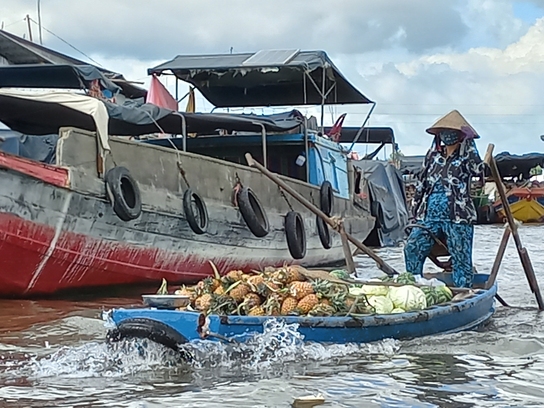
Can Tho University’s (CTU) social commitment
CTU, one of the main universities in the poorer Mekong Delta, wanted change for the region. It wanted to deploy its research, technology and human resources for a better economy and to improve farmers’ living conditions, but also for the socio-economic development of the country in general. When the Flemish universities and CTU started their VLIRUOS projects, they therefore focused on themes relevant to farmers in the Mekong area, such as agriculture, aquaculture and marine culture.
In general, the projects at CTU aimed at diversifying the agricultural sector in the Mekong Delta to get more people out of poverty and to build the university’s capacity by focusing on research areas such as aquaculture, food technology and production, biodiversity, environment, e-learning, management and ICT infrastructure.
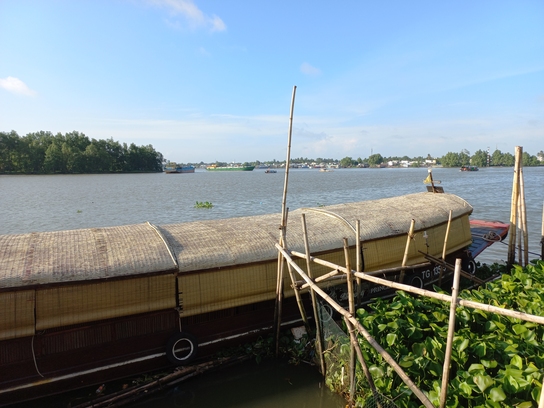
Small organism, big impact
A huge obstacle in the country’s aquaculture development was the fact that the brine shrimp Artemia – a type of small shrimp-like organism that can be found in salty environments such as salt lakes and salt pans – is not naturally present in Vietnam. Artemia can produce dormant eggs, known as cysts, that can be stored and hatched for live feed when needed – making the brine shrimp very suitable for use in fish and shrimp aquaculture. Together with UGent specialists, CTU researchers looked at the production cycle of Artemia in the Vinh Chau salt ponds, developed and improved technologies for Artemia production, and organised workshops to persuade farmers to use this new technology. After the first production cycle, the farmers could request help from the university by calling a telephone helpline. The university also trained so-called ‘extension officers’ that could provide farmers with information. Apart from workshops and a helpline, researchers produced several other kinds of materials providing information to local farmers, such as leaflets, flyers and posters in Vietnamese. The team also created a documentary for Can Tho television.
“The land and environment in the Mekong Delta are very well suited for Artemia production,” says Ha Thanh Toan, rector of CTU, who has been managing the cooperation from early on. “The quality of our Artemia cysts improved and became number one in the world in terms of production." Locally, in the Mekong Delta, production skyrocketed,” he adds. The type of Artemia that the farmers use today is also more nutritious than the one caught in natural environments. Twenty years ago, the national income from aquaculture was maybe a few hundred thousand dollars. Now, the last numbers say seven billion dollars per year. In general, the projects at CTU aimed at diversifying the agricultural sector in the Mekong Delta to get more people out of poverty and to build the university’s capacity by focusing on research areas such as aquaculture, food technology and production, biodiversity, environment, e-learning, management and ICT infrastructure.
An increase in yields and income
Aquaculture is just one chapter of the story though. The Mekong Delta’s most important crop is rice: in 2000, more than half of all Vietnamese rice was produced in this region, known as the country’s ‘rice bowl’. Although once successful, rice production in the Mekong Delta was gradually declining, forcing the government and farmer communities towards new cropping systems with rotations of rice and upland crops. In all these cases, CTU was consulted by local authorities, agricultural extension agents and farmers to come up with solutions. Together with their Belgian counterpart, the university took up the challenges and kick-started a research project as part of the IUC program. This research cooperation proved successful: the researchers came up with two models for farmers to attain this goal. This resulted in a higher productivity per year compared to traditional farming methods, and an increase in income for the farmers. Farmers also mention that these new models increase yields between 10 to 20% per year on average.
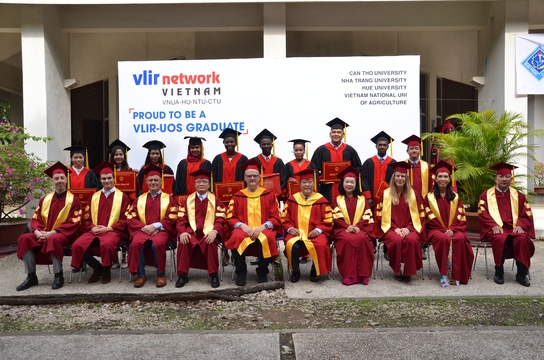
After a decade of IUC cooperation in Vietnam, what are the researchers’ conclusions?
“The VLIRUOS IUC programme was a big achievement for CTU in terms of human resources for the university,” says Ha Thanh. In the case of CTU, the IUC project funded 22 PhD and 32 Master scholarships. CTU is now an important centre for research and technology on aquaculture and food technology, spreading the knowledge to local farmers. Thanks to the cooperation, research has improved in quality and has been more widely spread among the population in the Mekong Delta. Farmers’ incomes in 2018 have increased, on average, by about 500 euros per month. Poverty in the province decreased from 26.9 % in 2008 to 12.5 % in 2015, according to local governments and farmers, thanks to the new Artemia farming methods. The newly developed methods for rice production have increased farmers’ incomes by 136.62 euros per month and 161.66 euros per hectare. Farmers themselves explain that this extra income has helped them pay for their children’s schooling, build houses and purchase land. They believe it has given them more life security and stability. Today, the university is also reaching out to other partners in Vietnam and the Global South, as VLIRUOS also wants to support local institutions to join forces.
For example, after the IUC cooperation, CTU led a national NETWORK project funded by VLIR-UOS, in collaboration with Vietnam National University of Agriculture, Hue University, Nha Trang University and the Research Institute for Aquaculture. The NETWORK programme, which unites the institutes around Bioscience for food, is a spin-off of the IUC programme with CTU, and helped Vietnam to develop research-based education on aquaculture and food technology. It also strengthened the linkages with the Flemish higher education institutes solidifying links with existing Master programmes in Flanders. The Network was quite successful in confirming Can Tho University as a hub for the internationalization of these master programmes, and as hub in Vietnam and South-East Asia for the South-South cooperation with other HE and science institutes.
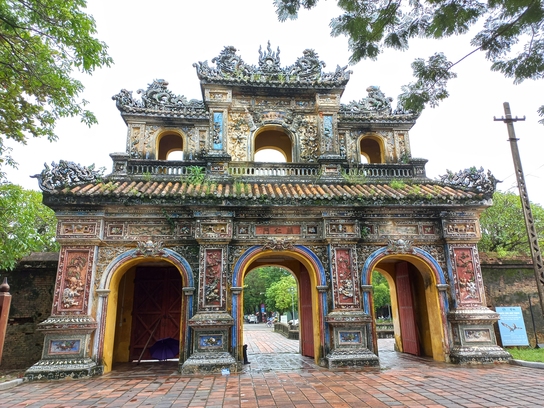
Uptake at Hué University
The final evaluation of the IUC at Hué University, conducted by an external evaluation consortium led by C-Lever8, reported on the uptake of research based learning by teaching staff (in other courses) and the integration of the IUC subject of family medicine into the regular medical programme of the Hué University of Medicine and Pharmacy were complemented by the establishment of a first ethical commission. The latter initiative, dedicated to the evaluation of animal-related experiments and research protocols, led to the creation of an ethical committee that not only assesses the ethical dimensions of such experiments but also rigorously scrutinizes manuscripts for plagiarism. Subsequently, the programme's influence extended to other academic institutions across Vietnam.
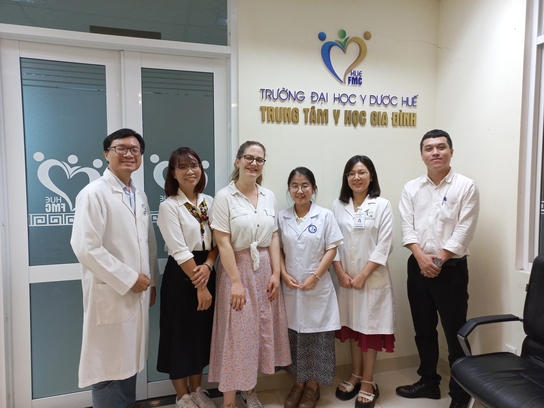
Also the Family Medicine Centre (FMC) at Hué showed great impact since it played a vital role in Primary health care policy development in Vietnam. Because of the activities and successful results, produced by the project, it enjoys a great reputation in Vietnam and allowed FMC to be involved in preparatory policy processes and to influence policy. This is based on a strong relationship with the Ministry of Health, developed through consultations and participation in conferences and workshops (in conjunction with other important influences, such as from the
Family Medicine Department of Hanoi Medical University). This is a case of strong external coherence, managed by the government.