


Preparing megacities for exponential growth
The world's population is growing at lightning speed, and nowhere is this more visible than in the megacities of Africa and Asia. Dar es Salaam, the economic capital of Tanzania is among the fastest-growing cities in the world. How can we prepare a city for exponential growth?
Currently, Dar es Salaam has a population of more than 8 million people. According to some estimates, by 2100, it will be the world's largest city with as many as 74 million inhabitants.* VLIRUOS is supporting a 10-year IUC project around sustainable urban development with Ardhi University (ARU) in Dar es Salaam. Ardhi University defined five priorities – from urban planning to socio-economic development – which they will work on together with expertise from Flemish universities and universities of applied sciences and arts.
Capacity building as a sustainable strategy
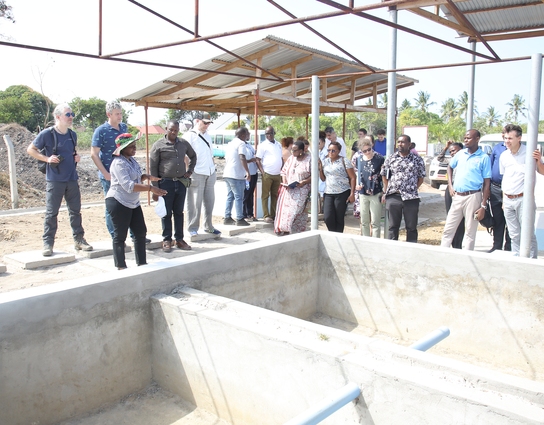
A collaboration through an IUC project invests in capacity building and knowledge development. In this way, challenges are addressed in a sustainable way rather than with ad hoc solutions. The insights gained in Dar es Salaam can also be applied to other fast-growing cities in Africa and Asia.
Ardhi University and the Flemish partners provide skills, knowledge and competences for training and research. This accommodates PhD and Master programmes, as well as education for university staff and other students. It also offers training to professionals, from engineers to contractors, from teachers to drivers of public transport.
Stronger together
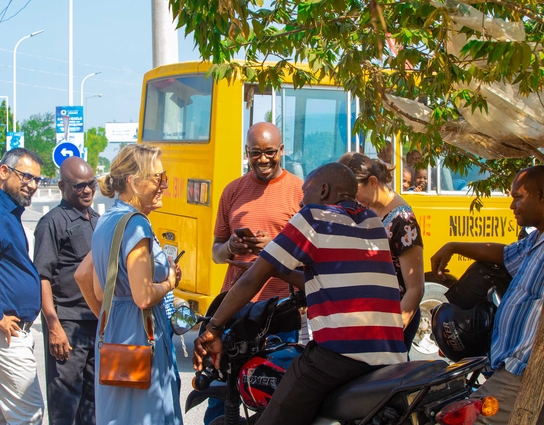
The big differences in context between Tanzania and Belgium mean that we can learn a lot from each other's expertise. In addition, the exchange of students creates an impact on teaching methods. The African students see how the university and society in Belgium work together to transform knowledge into concrete solutions. The Belgian students, in turn, see the strong connection with the Tanzanian government, allowing policy to be adapted more quickly.
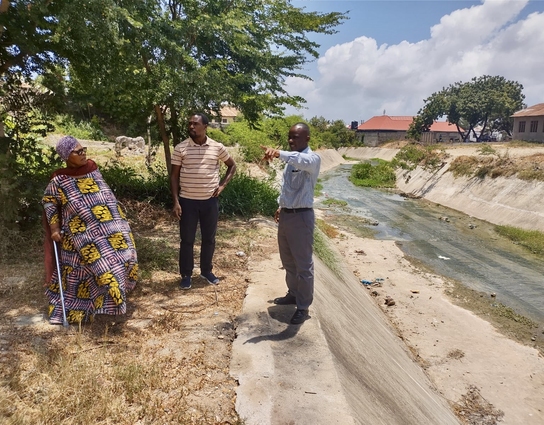
Ardhi University cooperates as much as possible with local actors, not only to analyse, but also to develop and test solutions together. For example, thanks to research and collective action, a piece of leftover green along a river has been officially recognised as a public meeting space.
Academic Expertise
To support sustainable urban development in Dar es Salaam, Ardhi University defined five thematic priorities, around which relevant expertise from Flemish universities and universities of applied sciences and arts was gathered.
This IUC project focuses on five sub-domains:
- Land use planning (UHasselt)
- Decent housing (KU Leuven and UHasselt)
- Socio-economic development (UGent)
- Urban transport (UHasselt)
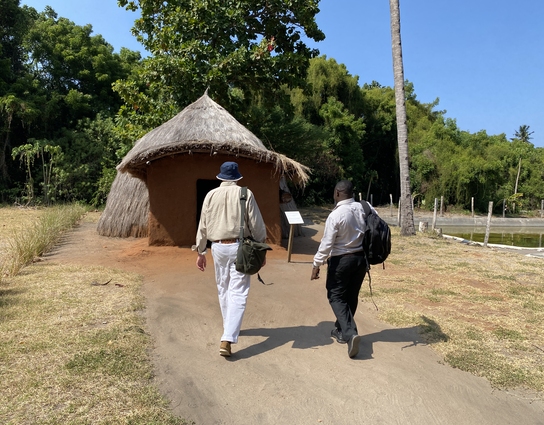
- Cultural heritage (UHasselt)
Two additional themes run as a common thread through all sub-domains:
- Gender and participation (UAntwerpen)
- ICT and Smart Sustainable and Inclusive Cities (UGent and KU Leuven)
Besides Ardhi University and the Flemish (co-)team leads mentioned above, other institutions are adding their expertise as team members. Belgian institutions: AP, Odisee, KU Leuven, PXL, UAntwerpen, UGent, UHasselt, VIVES. Tanzanian institutions: Ministry of Community Development, Gender, Women and Special Groups, Mzumbe University, Sokoine University of Agriculture, Tanzania Gender Networking Programme, Tengeru Institute of Community Development, University of Dar es Salaam, University of Dodoma.
This story is published as part of communication campaign together with ARES and ITM to promote Global Academic Cooperation.
*This text and all numbers are based on an article in UHasselt Magazine.